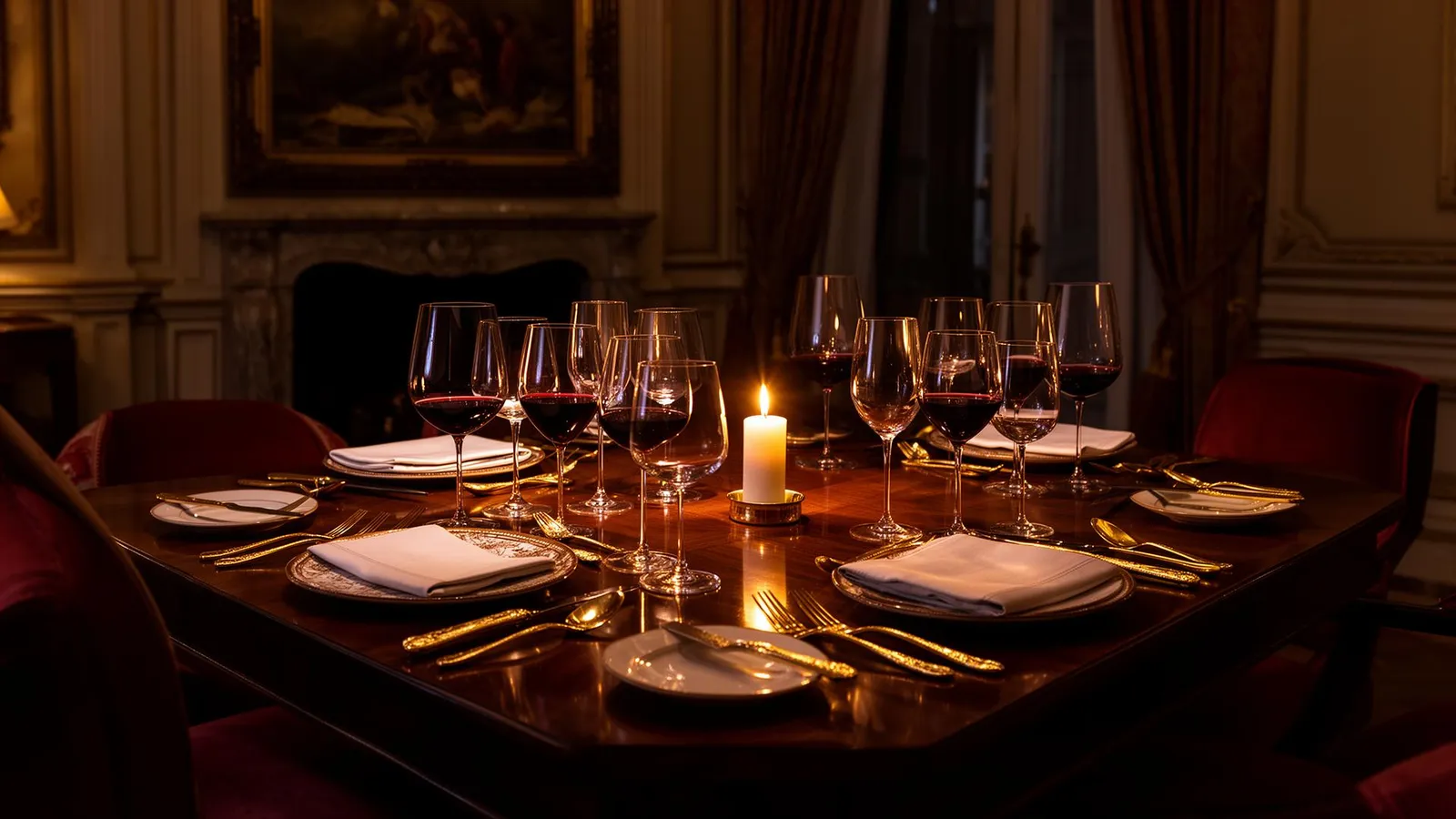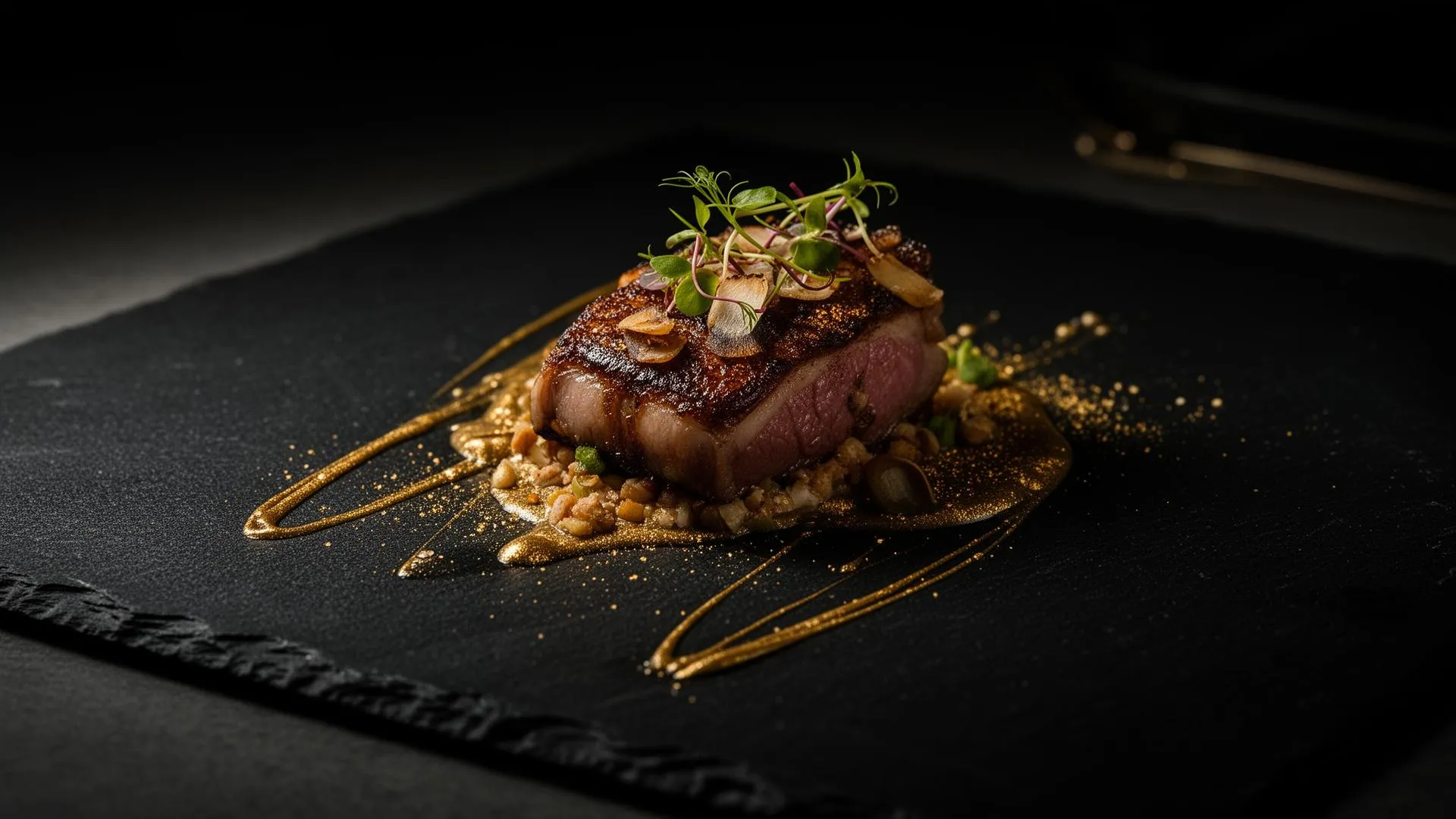
A successful private dinner doesn't begin on the plate. It begins as your guests step through the door: the light, the table, the smells, the music. Before the first starter even arrives, your guests already know whether the evening will be memorable. As a private chef, we've witnessed hundreds of dinners; these ten tips capture what separates a fine dinner from an unforgettable one.
1. Light is everything
A dinner is lit by candles, not by LEDs. Switch off the ceiling lights, turn on side lamps with warm bulbs (2200 to 2700 K) and place candles throughout the room — not just on the table. Skin looks better, food more appetising, and the conversation automatically warmer.
2. The table before the menu
A beautiful table with a modest menu will always beat a spectacular menu on a careless table. Linen or heavy cotton tablecloth, classic white plates, stemmed glasses, fabric napkins, low centrepiece (never blocking eye lines).
3. A playlist prepared in advance
Music is the silent guest. Build a 4-hour playlist at a volume low enough to leave conversation unimpeded. Instrumental jazz, bossa nova, chamber classical or warm ambient always work. Avoid tracks with overly familiar lyrics.
4. Respect the tempo
Guests arrive, have a cocktail, chat for 30 minutes: the first starter lands at 30-40 minutes, not earlier. Between courses, allow 20 to 25 minutes. A well-orchestrated dinner runs between 2h30 and 3h30, not more.
5. Wines: less quantity, more coherence
Two excellent bottles beat five mediocre ones. A precise white for the starters, a delicate red for the main, a sweet wine for dessert if relevant. A pairing that works elevates the evening; a poor one slows it down.
6. Mind the smells before guests arrive
If guests arrive at 8:30 PM, the home shouldn't smell of frying, cauliflower or raw fish. Cook the strongest-smelling preparations in the morning, air the room at 7:30 PM, and light a neutral natural candle (soy wax, beeswax).
7. The host eats too
If you're both host and cook, the evening gets complicated. Booking a private chef solves this: you experience the dinner with your guests, not between two pans.
9. A rhythm, not a succession
A dinner isn't a collection of successive plates. It's a narrative, with progression: lightness at the start, centrepiece in the middle, a pause (sorbet, light cheese) then sweet. Thinking in terms of rhythm changes everything.
10. An ending that lingers
After dessert, don't switch everything off. A coffee, a digestif, a fine chocolate, a conversation that stretches out: the real end of a great dinner is the 30 minutes that follow dessert, not dessert itself.
A successful dinner isn't the sum of the dishes. It's an atmosphere. And that atmosphere begins hours before guests arrive.
FAQ
Between 4 and 7 courses for a private dinner. Beyond that, attention dilutes and the post-dinner moment shortens.
No, but hiring one lets the host actually be a host. It's the difference between living the dinner and producing it.