Spain is the world's third-largest wine producer and the planet's largest vineyard by surface. Yet five great regions are enough to pair almost any menu I serve in Madrid. This article is a compass: what to ask for, where to buy, what to uncork for a dinner at home.
Rioja: classical elegance
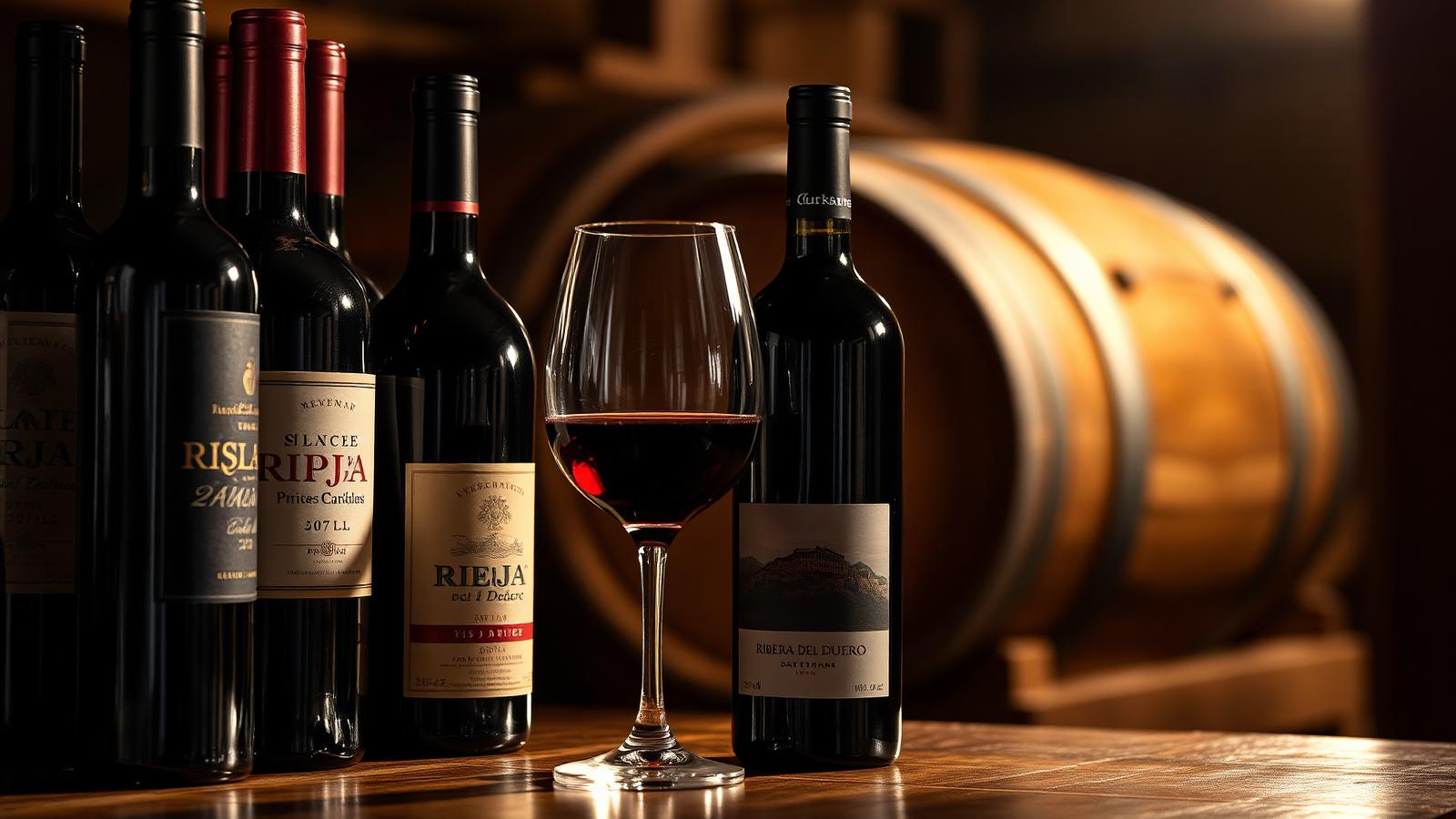
Rioja is Spain's best-known appellation and, for a long time, synonymous abroad with Spanish wine itself. Mostly tempranillo, classic reds spend time in American or French oak. Style: a balance of red fruit, sweet spice, and notes of coconut or vanilla.
Three categories to remember: Crianza (minimum 2 years' ageing, fresh and accessible), Reserva (3 years, more complex) and Gran Reserva (5 years, only in great vintages). For a private dinner, a Reserva 2018 or 2019 is a safe pick between €25 and €40.
- ◆Pairs with: roast lamb, grilled red meats, aged cheeses.
- ◆Producers to try: López de Heredia (classic), Muga, Marqués de Murrieta, Artadi (modern style).
Ribera del Duero: sculptural power
Ribera del Duero, two hours north of Madrid, makes tempranillo reds (called tinto fino here) that are more concentrated, darker and more structured than Rioja's. Extreme temperatures on the Castilian plateau yield wines of great intensity.
Dominant style: black fruit, liquorice, firm tannins that need oxygen. Decant 30 to 45 minutes before serving. Budget €30 to €60 for a good bottle.
- ◆Pairs with: beef tenderloin, game, duck breast, blue cheeses.
- ◆Producers to try: Vega Sicilia (legendary, expensive), Pingus (cult), Aalto, Hacienda Monasterio.
Priorat: Catalan minerality
Priorat, in Tarragona, makes wines from grenache and carignan grown on llicorella (slate schist) soils. The result: dense, mineral reds with a flavour of warm stone and concentrated black fruit.
Small production, high prices (from €35 for a good bottle). It's the wine I pour when a guest needs to be impressed.
- ◆Pairs with: long stews, lamb shoulder, mushroom juliennes, aged sheep's cheese.
- ◆Producers to try: Clos Mogador, Álvaro Palacios (L'Ermita is legendary), Mas Doix.
Rías Baixas: the Atlantic white
Rías Baixas, in Galicia, is the kingdom of albariño. Dry, taut, saline whites with the scent of white peach and candied lemon. It's the Spanish white I serve most often at aperitif time and with seafood.
A good bottle ranges from €12 to €20. Serve between 9 and 11°C — colder will kill the aromatics.
- ◆Pairs with: oysters, prawns a la plancha, scallops, ceviche, sushi.
- ◆Producers to try: Pazo Señoráns, Do Ferreiro, Zárate, Forjas del Salnés (more singular).
Jerez: aperitif and dessert
Jerez is probably the most underrated Spanish wine outside Spain. Six main styles — fino, manzanilla, amontillado, oloroso, palo cortado, Pedro Ximénez — cover the full spectrum, from the most bracing aperitif to the most decadent dessert.
A very cold fino or manzanilla (8°C) at aperitif time, with Iberian ham and Marcona almonds, is one of the best openings I know. A Pedro Ximénez over vanilla ice cream closes an evening with sublime simplicity.
- ◆Pairs with: Iberian ham (fino), fried fish (manzanilla), foie gras (oloroso), ice cream and blue cheese (Pedro Ximénez).
- ◆Producers to try: González Byass (Tio Pepe), Lustau, Equipo Navazos, Valdespino.
Where to buy good wine in Madrid
Three addresses I recommend to my clients:
- ◆Lavinia (Calle de José Ortega y Gasset 16): the city's largest selection, expert advice.
- ◆Reserva y Cata (Calle de Conde de Xiquena 13): a strong selection of small producers, intimate setting.
- ◆Mantequerías Bravo (Calle de Ayala 24): a curated selection, also for seafood and preserves.
Spain offers, in five regions, everything needed to cover any menu with elegance. My advice to clients hosting in Madrid: start with an albariño at aperitif time, continue with a Rioja Reserva at the table, finish with a Pedro Ximénez at dessert. Three bottles, three regions, a complete evening.
FAQ
Plan between half and three-quarters of a bottle per adult for a 4-course dinner, split across two or three references. For a group of 8, 5 to 6 bottles is reasonable.
No. Young reds gain from a 20-minute decant. Big Ribera and Priorat need 45 minutes. Very old Rioja Gran Reservas, by contrast, are decanted just before serving to preserve the aromatics.
Whites: 9–11°C. Young reds: 14–16°C. Structured reds: 16–18°C. Fortified wines (Jerez, Pedro Ximénez): 8°C for the dry styles, 12°C for the sweet ones.